Discussion about all the previous and latest technology in the world. Computers, Cars, Phones, Fashion, Models, Magazines, ect.....
Thursday, October 4, 2012
Wednesday, October 3, 2012
iPhone 5 vs. Galaxy S3 review: Who wins the battle between the two hottest smartphones on the market?
After endless rumors, Apple’s latest smartphone — the iPhone 5 — is finally out.
Rather than just do a straight iPhone 5 review, I’ll address something more topical — the hot topic that’s being discussed everywhere right now, including coffee shops, television ads and everywhere online: Which smartphone is better — the brand new iPhone 5, or the recently released Samsung Galaxy S3?
I happened to have my hands on both at the same time (a Verizon iPhone 5, and an AT&T Galaxy S3), so I’ll run down the comparisons between the two and let you know how the two most well-known super-phones on the market compare.
LOOKS
First, let’s talk about screen size. The iPhone 5 has grown, it’s up to 4 inches; the first size upgrade since the phone debuted. This means a taller, larger screen that iPhone fans have been waiting for. This is better, but not as much as I would have wanted. Even at 4 inches, I find the keyboard to be a bit small for typing.
If you want real size, the GS3 has the numbers – 4.8 inches to be exact. This is more real estate for your viewing pleasure, though some folks might not want a phone that big. It’s up to each person to decide how big is too big, but I think most people will be just fine with a 4.8 inch screen, which is a little more manageable than the 5-inch plus screen on phones like the Galaxy Note and the LG Intuition.
In terms of materials, the iPhone wins this battle; it’s more solid and less plasticky, an Apple hallmark. But don’t think the GS3 is a slouch here. It will withstand some drops too, it’s just not quite as sturdy as the iPhone. To be safe, with either phone, get a case.
Slimness is close, but iPhone wins out by a hair … 0.30 inches for iPhone, 0.34 inches for GS3. The difference is negligible, as both are very slim and light.
Full specs are as follows: The iPhone comes in at 4.87 inches high, 2.31 inches wide, .3 inches thick and a weight of 3.95 ounces. The GS3 is 5.38 inches high, 2.78 inches wide, .34 inches thick, and weighs 4.7 ounces.
SCREEN
In terms of what you’ll see on screen, both devices offer sharp visual quality for viewing media and photos and video.
With the iPhone 5, you get their well-known Retina display on the 4-inch touchscreen.
There is a 1136x640 resolution, or 326 ppi (pixels per inch). There is a fingerprint-resistant coating on the front, but it didn’t really work in my experience. I still found myself wiping my fingerprints off the phone regularly.
In the GS3, you get a slightly better resolution of 1280x720, but due to the larger 4.8-inch size the ppi is slightly less. The HD Super AMOLED screen on the GS3 is very bright and attractive.
This is one area where I would call it a push between the two phones. The numbers are slightly different, but both look amazing.
PROCESSOR
The iPhone 5, no exaggeration, is lightning quick. Apple did a bang-up job with its dual-core Apple A6 processor, and you won’t be waiting long to do anything.
But hold on, because the GS3 is definitely up to pace, in fact it’s even faster. Its 1.5 GHz dual-core Snapdragon processor is nothing to sneeze at (the European version is even better with a quad-core processor). Multitasking will not slow it down in the least, even if it involves intensive apps such as Pandora Radio or Netflix. (Side note: One benefit of Android over Apple’s operating system is that multitasking is much easier to manage on the Android OS than it is on an iPhone)
In the area of RAM, the iPhone 5 features 1 GB, but the GS3 features a whopping 2GB of RAM. This is going to become the new standard for smartphones, and the iPhone 5 will be seen as behind in this area, though Apple will argue its operating system requires less RAM to operate than the Android OS.
STORAGE
You can get the iPhone with various storage levels —- 16, 32 or 64 GB; of course, that’s what you get, no upgradability in the iPhones. The GS3 is available in 16GB or 32 GB options, plus it has a microSD slot, which allows for up to 64GB, so the potential for more storage space is there on the GS3. Realistically, though, most people don’t need to go past 64 GB, or even that high, especially with so much data and music, etc., stored in the cloud these days (For example, all your music could be stored online in iTunes or Google Music, so it wouldn’t take up space on your phone).
4G
The big news about the iPhone 5 is that it’s (finally) capable of accessing the 4G networks of its carriers, another example of Apple showing up fashionably late to the party. That is big news for Apple fans, who now will get faster downloads and uploads as a result.
But as Apple’s competitors are quick to point out, that’s old news for Android phone users. They’ve been using the faster 4G LTE networks for over a year now, so in this area Apple is just catching up to the Android competition.
The iPhone is offered on Verizon, AT&T, and Sprint, who all have their own 4G LTE networks. Verizon and AT&T’s networks are the most expansive right now, and Sprint’s is newer so its reach is limited.
The Galaxy S3 is available on all four major wireless networks – Verizon, AT&T, Sprint and T-Mobile. It’s basically the same phone on all four networks, other than some carrier-specific software that’s included on each version of the phone, plus the fact that it will access a different 4G network, depending which version you buy.
CAMERAS
More and more these days, people skip the standalone digital camera and rely on their smartphones. As a result, there are high expectations in this regard.
Good news: Both the iPhone 5 and the Galaxy S3 have fantastic cameras, and fantastic video quality too.
Both devices have an 8-megapixel camera in the rear, as well as crystal-clear 1080p HD video that looks amazing and life-like on replay. They do well in low light, for the most part, compared to previous versions of these phones.
In the area of front camera, which is used primarily for video chat, the GS3 does a little better with its 1.9-megapixel camera. The iPhone 5 front camera comes in at 1.2 megapixels. Both phones’ front camera feature 720p HD video quality.
Both phones have a great deal of editing/cropping/sharing ability in regard to photos, as was as various modes such as burst mode and panorama to choose from. To be fair, the Android phones have had the panorama shot for a while, and it’s now becoming available to iPhone users with the latest update to Apple’s operating system.
iPHONE CONNECTOR ISSUE
In addition to the change in size, a major update on the iPhone 5 is the new size of the charging connector – the newly named Lightning connector that is a lot smaller than all previous Apple chargers. A connector is included with your phone, but if you want to connect your iPhone 5 to your old iPhone accessories, you’ll need a new Lightning adaptor – which, in true Apple fashion, they’re willing to sell you online for only $30 (yes, a bit ridiculous I know).
Luckily for the Apple faithful, knockoffs usually come shortly after a new overprice adaptor is announced, but Apple should be ashamed of itself for this overcharging here like it always does for its silly adaptors. They probably cost $2 to make, and it’s simply price gouging. (Luckily for them, the most hardcore Apple fanboys/fangirls don’t care about their general trend of overpricing everything the company sells, for some strange reason I’ve yet to comprehend.)
MAPS
One big software change on the iPhone 5 is that Apple now relies on its own maps, and no longer uses Google maps. There have been some major bumps in the road for Apple in this transition, especially in Europe, where mapping is just way off. Even in the U.S., some folks aren’t happy with how the new maps work.
This is a work in progress, and a result of Apple trying to distance itself from its rivals (Google is behind the Android operating system, hence the distancing), so for now and probably a long time, the GS3 has the edge in terms of getting you where you need to go properly. If I were a user of the new iPhone, the downgrading of the navigation capability of my phone would be very annoying. They’d be better of just going online and visiting Google Maps and leaving the Apple navigation alone completely until they work out the bugs in this transition.
Point blank, Apple’s weakening of its maps feature is the biggest disappointment on the iPhone 5, and a big win for the Galaxy S3 in comparison, as Google Maps work wonderfully on it.
APPS
Of course, behind all this other mess, it’s really – for a lot of folks – all about the apps.
Apple, of course, was out with its iPhone before Android phones ever hit the market, so they got a big jump on the competition in terms of having better app selection. And it’s true that pretty much whatever you need to do with an app, Apple’s got you covered on the iPhone.
But that doesn’t necessarily mean the Android competition loses this battle. It may have gotten a later start, but in the past several years Google’s Android Market (now referred to as the Google Play Store) has grown by leaps and bounds, and I would say at this point it’s caught up to Apple’s App Store in terms of offering whatever you might need in the app department.
In the past, the apps battle was a clear win for Apple, but I think those days are over.
OPERATING SYSTEMS
This is really the big difference between these two phones.
Apple’s iPhone 5 runs the latest version of Apple’s operating system – iOS 6. This features integration with Apple’s ecosystem – iTunes, iBooks, etc. When you use an iPhone, you’re in Apple’s world. Some people like that, others don’t.
With the Galaxy S3, you get Android 4.0 (aka Ice Cream Sandwich), and an update promised soon to Android 4.1 (aka Jelly Bean), and you’re in Google’s world here – Google Maps, Google Voice, Gmail, etc.
The operating systems operate quite differently in my experience. I find the Android OS more easily maneuverable than iOS 6, for basic reasons such as the presence of a pull down menu listing your apps in use, and the presence of a back button on the phone instead of having to hunt for an arrow within each app to return to the previous screen. Other little things bother me about iOS 6, such as the more difficult steps you must take to sign out of some apps that are operating in the background.
Still, I know a lot of folks who love their iPhones and don’t complain about the user experience, so obviously we’re not all going to have the same opinion in this regard. This opinion about operating system preference, to me, is the decision you’ll make that will likely have the biggest impact in determining which of the two phones you prefer.
NFC
One feature that the GS3 has that the iPhone 5 does not is NFC, aka near-field communication, which allows users of phones that both have this feature to share certain things by simply tapping the phones together, and you can use it to pay for purchases. It’s a very cool feature, though not widely used yet, so I don’t think it will sway too many people from Apple to Android. But, it’s fair to mention that Apple is lagging behind in this exciting new area of smartphone technology, and if they’re smart they’ll make sure to add it on next year’s model.
CALL QUALITY
Call quality on these phones will, of course, depend on which network you are using and where you are calling to/from, but in my time with Verizon’s iPhone 5 and AT&T’s GS3, I didn’t experience any dropped calls or distortion or anything of that sort. It would appear to me that the issues previous versions of the iPhone have had with call quality are now pretty much gone.
BATTERY
4G phones are notorious for sucking up battery, but with proper management of your features like WiFi and Bluetooth, you can make them last longer.
Samsung’s GS3 slightly outlasted Apple’s iPhone in my testing, and both were among the better 4G phones I’ve seen so far. They got me through the day and then some, unless I was just going crazy with my app use.
NEW EARPODS
One small change on the iPhone 5 comes in the area of accessories, as a new variety of earphones are included — called EarPods. As you can guess, they fit better in your ear. Hardly revolutionary, but I suppose they do feel a little better in the ear.
SIRI VS. S VOICE
The star feature of the iPhone 4S was Siri, your personal assistant who will answer any question you ask – sometimes accurately, sometimes not. She’s a little better this time around, and still has a little wit in her, but Samsung also offers something similar on the GS3 – called S Voice. It’s got its own bugs, too, just like Siri, but both of them allow you to ask questions, open apps, make calls, etc.
Some consider S Voice to be a clone of Siri, but that’s for the courts to settle (Apple and Samsung will likely be suing each other into the next century over various copyright cases). To the user, I’ll just say this: Both Siri and S Voice do what they’re supposed to do – for the most part, but with a few hiccups that will likely be worked out on future updates. Siri maybe gets a slight advantage, but it’s not by much.
PRICES
The pricing for the iPhone 5 is the same on Verizon, AT&T and Sprint: With a new 2-year-contract, you pay $199 for the 16GB version, $299 for the 32GB version and $399 for the 64GB version.
Costs for the Samsung Galaxy S3 vary by carrier: On both Verizon and Sprint, it costs $199.99 for 16GB version, $249.99 for 32GB version, with new contract; on AT&T, it’s $199.99 for 16GB version (and refurbished GS3s are just $99.99) with a new contract; and on T-Mobile, prices are now $99.99 for 16GB version and $149.99 for 32GB version, with a new contract.
This is to be expected, as Apple never adjusts its pricing (at least until the next model comes out), but with the Android phones you can sometimes catch a break at the point of purchase. Personally, I think the $399.99 price out of pocket even with a contract is a bit ridiculous, but I doubt most people would go that route anyway, as 64GB is not needed by 90-some percent of buyers.
BOTTOM LINE
As Samsung and Apple battle in the courtroom over copyrights and the billions they are making, the battle between these two superphones is now officially under way, as the iPhone 5 is finally here to compete with the Galaxy S3, which had been dominating the market for the past several months.
My final verdict is that these phones are very close in overall performance and quality, but the undeniable truth is that the iPhone 5 is finally catching up to its Android competition – namely the Galaxy S3. Most specs are very close between the phones, but the Galaxy S3 has some features that you can’t do with iPhone (NFC) and better maps/navigation.
Both phones are very fast, have 4G access, great cameras and video, and it’s a safe bet to say these are the two best phones on the market right now. Really, in the end, it all comes down to what is your favorite operating system and how big you want your phone to be.
Some people (aka Apple fanboys/fangirls) swear by Apple and herald the greatness of iOS 6, which I recognize does have some solid upgrades. But others (aka Fandroids) believe that Android’s OS is far superior and easier to use.
In my book, the Galaxy S3 is slightly ahead in this battle, but those who swear by the iPhone likely won’t agree with me. Still, I recommend they check out the alternatives though before committing to the iPhone 5.
The iPhone may still be a great phone, but we’re long past the day where it was assumed to be the best phone on the market. That only lasted a couple years, really. This time around, the Galaxy S3 gives the iPhone 5 a good run for its money, and is arguably better, so I would recommend all new smartphone buyers contemplating buying either phone try out both and see what side of the argument they choose to be on.
________________________________________________________________
iPhone 5 vs. Galaxy S3 review: Who wins the battle between the two hottest smartphones on the market?
![]() |
Apple's iPhone 5 (left) and Samsung's Galaxy S3 (right) are the two hottest phones out right now. Tech Time writer Matt Myftiu prefers the Galaxy S3, but says that in the end it comes down to your preference of operating system and how large you want your phone to be.
First, let’s talk about screen size. The iPhone 5 has grown, it’s up to 4 inches; the first size upgrade since the phone debuted. This means a taller, larger screen that iPhone fans have been waiting for. This is better, but not as much as I would have wanted. Even at 4 inches, I find the keyboard to be a bit small for typing.
In terms of what you’ll see on screen, both devices offer sharp visual quality for viewing media and photos and video.
The iPhone 5, no exaggeration, is lightning quick. Apple did a bang-up job with its dual-core Apple A6 processor, and you won’t be waiting long to do anything.
You can get the iPhone with various storage levels —- 16, 32 or 64 GB; of course, that’s what you get, no upgradability in the iPhones. The GS3 is available in 16GB or 32 GB options, plus it has a microSD slot, which allows for up to 64GB, so the potential for more storage space is there on the GS3. Realistically, though, most people don’t need to go past 64 GB, or even that high, especially with so much data and music, etc., stored in the cloud these days (For example, all your music could be stored online in iTunes or Google Music, so it wouldn’t take up space on your phone).
The big news about the iPhone 5 is that it’s (finally) capable of accessing the 4G networks of its carriers, another example of Apple showing up fashionably late to the party. That is big news for Apple fans, who now will get faster downloads and uploads as a result.
More and more these days, people skip the standalone digital camera and rely on their smartphones. As a result, there are high expectations in this regard.
In addition to the change in size, a major update on the iPhone 5 is the new size of the charging connector – the newly named Lightning connector that is a lot smaller than all previous Apple chargers. A connector is included with your phone, but if you want to connect your iPhone 5 to your old iPhone accessories, you’ll need a new Lightning adaptor – which, in true Apple fashion, they’re willing to sell you online for only $30 (yes, a bit ridiculous I know).
One big software change on the iPhone 5 is that Apple now relies on its own maps, and no longer uses Google maps. There have been some major bumps in the road for Apple in this transition, especially in Europe, where mapping is just way off. Even in the U.S., some folks aren’t happy with how the new maps work.
Of course, behind all this other mess, it’s really – for a lot of folks – all about the apps.
This is really the big difference between these two phones.
One feature that the GS3 has that the iPhone 5 does not is NFC, aka near-field communication, which allows users of phones that both have this feature to share certain things by simply tapping the phones together, and you can use it to pay for purchases. It’s a very cool feature, though not widely used yet, so I don’t think it will sway too many people from Apple to Android. But, it’s fair to mention that Apple is lagging behind in this exciting new area of smartphone technology, and if they’re smart they’ll make sure to add it on next year’s model.
Call quality on these phones will, of course, depend on which network you are using and where you are calling to/from, but in my time with Verizon’s iPhone 5 and AT&T’s GS3, I didn’t experience any dropped calls or distortion or anything of that sort. It would appear to me that the issues previous versions of the iPhone have had with call quality are now pretty much gone.
4G phones are notorious for sucking up battery, but with proper management of your features like WiFi and Bluetooth, you can make them last longer.
One small change on the iPhone 5 comes in the area of accessories, as a new variety of earphones are included — called EarPods. As you can guess, they fit better in your ear. Hardly revolutionary, but I suppose they do feel a little better in the ear.
The star feature of the iPhone 4S was Siri, your personal assistant who will answer any question you ask – sometimes accurately, sometimes not. She’s a little better this time around, and still has a little wit in her, but Samsung also offers something similar on the GS3 – called S Voice. It’s got its own bugs, too, just like Siri, but both of them allow you to ask questions, open apps, make calls, etc.
The pricing for the iPhone 5 is the same on Verizon, AT&T and Sprint: With a new 2-year-contract, you pay $199 for the 16GB version, $299 for the 32GB version and $399 for the 64GB version.
As Samsung and Apple battle in the courtroom over copyrights and the billions they are making, the battle between these two superphones is now officially under way, as the iPhone 5 is finally here to compete with the Galaxy S3, which had been dominating the market for the past several months.
________________________________________________________________
Galaxy Note 2 Smart Rotation Makes Using Your Device Less Frustrating
We’ve all experienced this before —
You’re browsing through your favorite website, checking out that new
book a friend told you about or just browsing through a website on your
smartphone. Suddenly, you get the desire to lie down but want to
continue reading. Everything’s fine at first but then you turn on your
side… And the screen rotates. The device keeps doing that with the
slightest movement and you just end up being frustrated. Sure, you’re
probably laughing right now thinking this another one of those
“first world problems” but if you’ve experienced it, you know it’s
pretty annoying. The good news is that the Samsung Galaxy Note 2 wants
to make this petty issue go away with its Smart Rotation feature.
The Galaxy Note 2′s Smart Rotation is similar to the Galaxy S
III’s Smart Stay system. It’s a feature that uses the front-facing
camera of your device to determine the orientation of your face. It then
uses that information to match your screen’s orientation accordingly
using a built-in sensor. What this means is that regardless of what
angle you’re reading, the Galaxy Note 2 will recognize which direction
is the right way up and keep your screen that way. The only catch is
that since it needs the front-facing camera to work, some ambient light
is necessary for it to detect you and work its camera trickery.
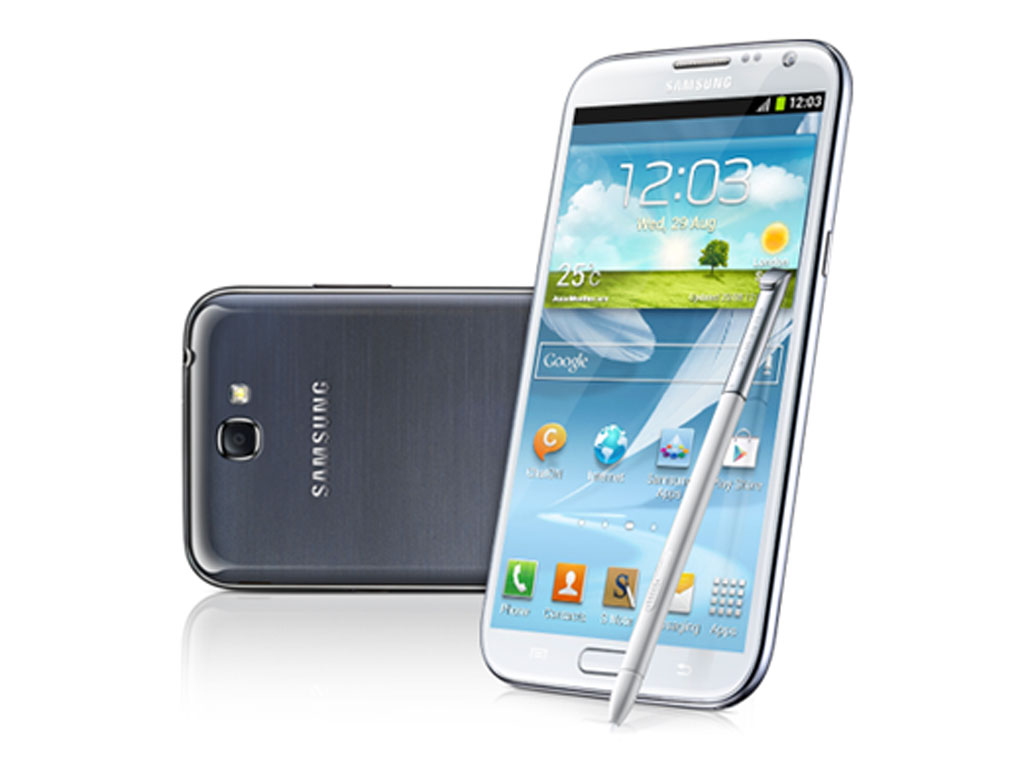
Wondering how you can access this feature on your Galaxy Note 2? All you have to do is go to Settings > Display and voila, you can switch it on or off! Again, it’s not the most life-changing feature out there but I’m sure it’s one you’ll be glad your Galaxy Note 2 has.
Have you tried the Samsung Galaxy Note 2 yet? Is it the best device out in the market? Share your thoughts in the comments below!
Wondering how you can access this feature on your Galaxy Note 2? All you have to do is go to Settings > Display and voila, you can switch it on or off! Again, it’s not the most life-changing feature out there but I’m sure it’s one you’ll be glad your Galaxy Note 2 has.
Have you tried the Samsung Galaxy Note 2 yet? Is it the best device out in the market? Share your thoughts in the comments below!
________________________________________________________________
T-Mobile and MetroPCS to merge
NEW YORK (CNNMoney) -- T-Mobile USA and MetroPCS have agreed to merge, joining together two of the nation's largest low-cost wireless carriers.
Both companies have been struggling. Though each remains profitable, their smartphone offerings are lackluster (i.e., no iPhone), they are far behind the curve on network technology, and both are shedding
The combined company, which will be called T-Mobile, will have 42.5 million subscribers -- 33.2 million from T-Mobile and 9.3 million fromMetroPCS (PCS, Fortune 500).
It will also have annual sales of nearly $25 billion, an easier path to4G-LTE network deployments, and estimated cost savings of up to $1.5 billion per year. The companies said that combining their wireless spectrum, customers and finances will help give the new company the scale and resources it needs to succeed in a market increasingly dominated by AT&T (T, Fortune 500) and Verizon (VZ, Fortune 500).
The deal is complex, complicated by T-Mobile's subsidiary status and the two sides' incompatible wireless technologies.
MetroPCS will send $1.5 billion to its shareholders ($4.09 per share) and then perform a 1-for-2 reverse split of its stock -- meaning that the number of outstanding shares would be halved and the value of each share would double. MetroPCS will then buy all of T-Mobile USA's assets by giving T-Mobile parent company Deutche Telekom 74% of its common stock. That means the German telecom giant will remain in control of the combined company, and will provide financial support through debt and credit offerings.
Customers, though, will continue to deal with two distinct brands operating separately -- at least for now. The two carriers have different network technologies, which means that MetroPCS' phones are incompatible with T-Mobile's network, and vice versa.
That could change eventually, since the new company plans to deploy a 4G-LTE network that will work across both customer bases. Upgrading all customers to that network and discontinue the legacy technologies will be a gradual, multi-year process.
New T-Mobile CEO John Legere will remain at the helm of the new carrier, and MetroPCS' Chief Financial Officer Braxton Carter will stay on as CFO. The companies did not announce plans for MetroPCS CEO Roger Linquist.
The new company will be have its headquarters in T-Mobile's hometown -- Bellevue, Wash. -- with a presence in Dallas, where MetroPCS is based.
Both companies' boards have approved the deal, which they expect to close in the first half of 2013, assuming regulators allow it to go through.
"The T-Mobile and MetroPCS brands are a great strategic fit," René Obermann, CEO of Deutsche Telekom, said in a prepared statement. "We are committed to creating a sustainable and financially viable national challenger in the U.S., and we believe this combination helps us deliver on that commitment."
The merger is between the nation's fourth- and sixth-largest wireless carriers by revenue, but T-Mobile will not move any farther ahead in the list of largest U.S. cell phone companies. The combined company will still be smaller than third-place Sprint (S, Fortune 500) both in terms of sales and number of subscribers.
T-Mobile accepted AT&T's $36 billion buyout offer last year, but that deal was scuttled by U.S. regulators. 
________________________________________________________________

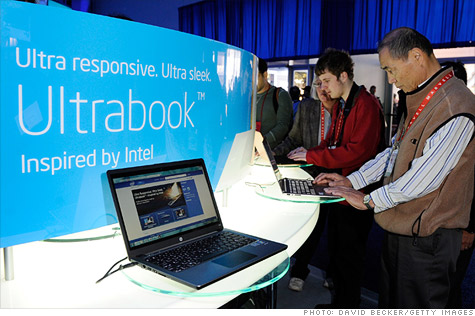
Touted heavily at this year's Consumer Electronics Show, ultrabook sales haven't lived up to expectations.
NEW YORK (CNNMoney) -- One year ago, skinny, sleek ultrabooks were being hailed as the great savior of the struggling PC business. The white knight hasn't arrived yet. Ultrabook sales so far have sorely disappointed, and one research firm is slashing its 2012 forecast by more than half.
IHS iSuppli laid out a stark view of the field in a report it cheekily titled "Dude, You're Not Getting an Ultrabook." The research firm now expects about 10.3 million ultrabooks to ship worldwide in 2012. Earlier this year, its prediction was 22 million.
There are two key reasons for lackluster sales of the super-thin and super-fast notebooks, according to IHS iSuppli: "nebulous marketing and unappealing price."
The company also took a shot atIntel (INTC, Fortune 500), the creator of the "ultrabook" category, for its too-strict standards. The company's "increasingly stringent set of definitions" mean that some computers that were once called ultrabooks are now called "ultrathins" -- a new, unfamiliar bit of jargon in a field that already isn't doing well marketing to consumers.
"So far, the PC industry has failed to create the kind of buzz and excitement among consumers that is required to propel ultrabooks into the mainstream," Craig Stice, IHS's senior principal analyst for computer platforms, wrote in the report.
That's even more of a problem considering the marketing blitz around tablets and smartphones. A long list of companies have released shiny new tablets or phones recently: Apple (AAPL, Fortune 500), Amazon(AMZN, Fortune 500), Nokia (NOK), Microsoft (MSFT, Fortune 500) and more.
The report also criticized the $1,000 price point for most ultrabooks, saying that a cut to $600-$700 could spur sales in 2013.
Intel has a lot to lose if ultrabooks don't take off. Consumer demand for PCs continues to slump, particularly in the United States, Canada and Europe. Intel heavily hyped ultrabooks, a word it trademarked, at the Consumer Electronics Show earlier this year, and predicted that ultrabooks would account for 40% of all consumer notebook sales by the end of 2012.
Despite the slashed sales forecast, the ultrabook field still has a few bright spots. Intel is releasing a new microprocessor called Haswell in mid-2013.Microsoft's (MSFT, Fortune 500) new Windows 8 operating system, due out later this month, could be another sales catalyst. It runs on both traditional PCs and tablets and will appear on ultrabooks from companies including Hewlett-Packard (HPQ, Fortune 500) and Dell (DELL,Fortune 500).
Those moves could help ultrabooks pull out of their slump next year, IHS iSuppli said in its report, especially if pricing and marketing improve. The company predicted that ultrabook shipments will rise by more than 300% next year and continue growing to 95 million units by 2016. 
________________________________________________________________
Here's how social boosts the bottom line
At Fortune's Most Powerful Women Summit, GE's Beth Comstock and NASDAQ Corporate Director Nilofer Merchant advised corporations on how to use social media to innovate -- and boost the bottom line.
By Colleen Leahey
FORTUNE – At a breakfast roundtable Tuesday morning at the Fortune Most Powerful Women Summit, author of 11 Rules for Creating Value in the Social Era Nilofer Merchant kicked off discussion with quite the statement: "Corporate strategy has outlived its usefulness." At her side, General Electric (GE) Chief Marketing Officer Beth Comstock agreed. "The traditional way of corporate strategy is over. [Companies] have to reorient."
Business is social, Comstock claimed. Technology enables companies to connect with customers by creating more collaborative, transparent relationships – but teaching an old dog new tricks isn't easy. "In the beginning, [social innovation] doesn't scale," Comstock warned, citing the difficulty in convincing executives to alter what they've been taught (and put into practice) for the past forty years. "They'll say, 'That's cute,' or 'My kids do that, but it doesn't relate to me."
Merchant chimed in, referring to the oft-taught business definition of marketing: a way to capture value. "It's a bit of a war metaphor – capture," she laughed. "The new [marketing] metaphor is much more relational." Social shouldn't be used as a popularity contest, Comstock added, or "you'll probably lose." Instead, it should be used as a tool that allows collaboration between consumers and companies. "You're giving up a certain amount of control, but getting much more back," Merchant said, adding that every definable problem can be solved by engaging a larger group in the discussion.
The admission from a company that it doesn't have all the answers can be tough, Comstock said. But doing so via social yields innovative (and bottom line-boosting) results. GE engages entrepreneurs and experts through competitions, like its Ecoimagination Challenge. "You have to create a platform that invites [innovative ideas]." Merchant nodded her head, saying that companies will see much more engagement if they co-create initiatives and ideas with consumers. "Sharing almost feels unnatural, but it's the best way to have new ideas." A closed fist around data will harm, not help, companies.
Open conversation doesn't mean answering questions via Twitter or Facebook (FB); that no longer "makes a company socially savvy," said Comstock. "Data is out there, and [companies] have to use data to enhance the experience with the customer." Merchant cited website Patients Like Me, which allows friends to share personal medical history and stories to help one another, as an example of a community larger companies can emulate to increase discussion and solve problems (whether they be in health or any other subject).
Though inspiring, the idea of sharing customers' personal information is jolting. But Merchant said hoarding intellectual property is not the answer – it's in the execution of getting a creative use of that IP to market reality quickly. The exchange of IP creates a relationship with the created community – and therefore the brand. Understanding the worry that sharing data can hurt a company's competitive edge, Comstock added: The customer tells you what's valuable. Know your competitive advantage," and build on that.
McAfee saw a 5% contribution to its bottom line, said Merchant, by creating a network of peer-to-peer customer support. Other accountant customers answer 74% of customer questions at Intuit; the company is peripheral and supporting. These active consumers aren't being paid – they're simply passionate about the brand or subject. "Every company has a mission and we're judged by how transparent we are," Comstock said. "People want to see all sides of you as a brand, not just the good stuff."
By creating an honest dialogue with consumers through social, the brand is strengthened, innovation is sparked, and customer engagement – due to loyalty and interest in the company's mission – can reach profitable highs.________________________________________________________________
Today in Tech: How Facebook is selling access to your data
Facebook sells more access to its members[THE WALL STREET JOURNAL]
________________________________________________________________
Also: Zuckerberg visits Russia, Paul Allen weighs in on Windows 8, and Sean Parker talks Airtime.
Facebook sells more access to its members[THE WALL STREET JOURNAL]To amp up the effectiveness of its ads, Facebook in recent months has begun allowing marketers to target ads at users based on the email address and phone number they list on their profiles, or based on their surfing habits on other sites.It has also started selling ads that follow Facebook members beyond the confines of the social network.
Along with executive turmoil — including the upcoming stepping back of tech lead Eric Feng and Shawn Fanning, Parker's Napster co-founder, who was the CEO and driving force behind Airtime while Parker was focused on Spotify last year — there has also been a very weak launch in getting Airtime off the ground.
Zuckerberg meets with Medvedev in a crucial market [THE NEW YORK TIMES]
Mr. Zuckerberg and Mr. Medvedev talked about Facebook's role in politics, though only jokingly in reference to its importance in the American presidential campaign, according to Mr. Medvedev's press office.They also discussed copyright rules and high-tech business. Mr. Zuckerberg gave the Russian leader a T-shirt; the meeting lasted about 20 minutes.
Paul's take on Windows 8 [PAUL ALLEN]
I did encounter some puzzling aspects of Windows 8. The bimodal user experience can introduce confusion, especially when two versions of the same application – such as Internet Explorer – can be opened and run simultaneously. Files can also be opened in either of the two available modes.
Nest unveils its next device [FORTUNE]
Fadell's homage to Apple and Jobs goes beyond theatrics. The new Nest, which replaces the old Nest and still sells for $249, is thinner ("20% thinner," Fadell says), one piece of stainless steel rather than two, has more connectors than the first version, and even has a neater back side. This last bit is a nice nod to the Jobs obsession with the inside of the early Macintosh, the part consumers wouldn't see. The back of a Nest goes up against the wall. Get it?
________________________________________________________________
Subscribe to:
Posts (Atom)